Can there be a “just war”?

Summary of the Wellington Abrahamic Council roundtable on “Can there be a just war?”

On Tuesday evening 23 June 2026, the Wellington Abrahamic Council of Jews, Christians, and Muslims held a closed roundtable discussion, with three each of Jewish, Christian, and Muslim discussants to explore the question “Can there be a just war?” The meeting was held under the Chatham House Rule.

Framing and ground rules

The evening opened with a reminder of the Council’s shared values: assuming good faith, being curious, forgiving offence taken as unintentional, and reaching decisions by consensus. The convenor noted that holding such a conversation safely depended on years of trust-building, and that even within each faith tradition there were many points of view, not always congruent.

The Jewish perspectives

One speaker argued that Judaism lacks a formal just war theory, since for nearly two millennia (70 CE to 1948) the Jewish people lived without political sovereignty or standing armies. Drawing on rabbinic thought, they framed war as a “social aberration” and a deviation from the ideal. They cited the distinction between obligatory wars (self-defence) and discretionary wars (for power), warning of a “slippery slope” where a defensive war can morph into a war of choice. Using the Deuteronomy injunction against destroying fruit trees during a siege, they stressed that a righteous cause grants no “blank cheque,” and that combatants remain morally responsible for foreseeable harm. The conclusion: war can be just, but only as administered under the strictest moral limits.

A secular Jewish speaker rejected religion as a reliable guide, noting that scripture has been used to justify atrocities, but affirmed belief in just wars as codified in international law. They walked through the framework of when war is justified, how it must be conducted (distinguishing combatants from civilians, proportionality, treatment of prisoners), and emerging questions of justice after war. They highlighted the contribution of Jewish jurists to concepts like genocide and crimes against humanity, while arguing that much recent conduct in the Middle East cannot be justified under international humanitarian law. They also made the point that although the group of people in the room were open to this conversation, we could have had a different group of people from each of the three Abrahamic religions in the room that would have been very hostile to each other.

A third speaker, less focused on theology, reflected on the value of interfaith dialogue itself and expressed concern about rising antagonism towards the Jewish community in wider society, and the difficulty of extending the calm of such discussions into the broader public.

The Christian perspectives

One speaker reframed “just war theory” as “violence-reduction criteria” – not a moral validation of war but a set of rules to mitigate its impact. They contrasted punitive justice (what rule was broken, who is to blame, what punishment) with restorative justice (what happened, who was affected, what is needed to put things right), arguing that, theologically, justice is about restoring broken relationships and therefore no war can be truly “just.”

Another Christian speaker traced the evolving Catholic position, citing Pope Leo’s recent statement that just war theory is now “outdated,” and noting the moral as well as material damage of war. They argued, however, that the traditional criteria – especially “reasonable prospect of success”, “competent authority”, and “last resort” – still carry weight and should not be discarded, even as unilateralism and new warfare make a just war increasingly hard to envisage.

A further reflection invited a broader, eternal perspective: that the human yearning for peace and mercy reflects the divine image, and that those who never receive earthly justice might place hope in a just and merciful God, who enables us to forgive and bless even those who are repulsive to us.

The Muslim perspectives

Speakers emphasised that Islam treats peace as a core value and permits war only under strict conditions – self-defence and protection of the oppressed, never aggression. Strict rules forbid harming civilians, destroying crops, or mistreating prisoners. One speaker clarified that jihad is primarily an inner struggle against one’s instincts, not religious warfare.

A central contribution focused on the aftermath of war: the duty to pursue peace when the enemy inclines towards it, to act with justice and reconciliation even towards former enemies, and to embrace forgiveness over revenge. The conquest of Mecca without bloodshed as related in the Qu’ran was offered as the model. War is never an end in itself; the true test of faith begins when the weapons fall silent.

Recurring themes from the general discussion

Several threads united the traditions. There were strong resonances across all three faiths – protection of non-combatants, prohibition on destroying the environment, and peace as the ultimate aim. Many speakers questioned whether the very framing – “is this war just?” – already concedes too much, and that the more important question is how to construct peace, which must be built intentionally over time rather than treated as the mere interval between conflicts.

Participants noted two contemporary shifts that strain just war theory: the breakdown of international legal norms and multilateralism, and the rise of autonomous weaponry and AI, which raises unanswerable questions of moral accountability when machines, not people, make lethal decisions.

A former service member observed that just war is rarely discussed within the military itself, that such decisions rest at the highest political levels (citing historical examples of leaders developing misgivings about bombing campaigns), and that the framework is heavily Eurocentric. This prompted a suggestion to engage military chaplaincy in the conversation.

Where the group landed

There was appetite to continue with a follow-up session reframed around building “just peace” rather than just war, to consider producing a joint statement capturing the resonances, and to explore practical outreach, such as educational resources that surface a counter-tradition of peacemaking within national history. The evening closed with a reflection on refugees as the human cost of war, and a hope to work towards a day when refugees no longer exist.
Keep our sacred spaces sacred

In the wake of the recent shootings at places of worship at Bondi and San Diego, the Wellington Abrahamic Council of Jews, Christians and Muslims calls on all humans, religious and secular, to keep our sacred spaces sacred. All three Abrahamic religions believe in the sanctity of life. Killing people is wrong. Killing people as they gather to pray and express their spirituality is evil, no matter your religious or secular stripe.

The Abrahamic Council also calls on organisations, schools, governments, businesses, and places of worship to discuss and encourage their members to engage with people who are different to them, and get to know them. We believe that building real-life connection with “others” is the long-term solution to these acts of hate.

Jewish co-chair Dave Moskovitz says “Our society is increasingly fragmented, where we don’t have face-to-face contact with people that are different to us in real life. Many people spend most of their time online where they often interact with people like themselves, and objectify others. Judaism calls on us to ‘love your neighbour as yourself’, so we should go meet and get to know our neighbours. If they know us, they’ll better understand us and will be less likely to want to kill us.”

Christian co-chair Nick Polaschek says “Contrary to one current strain within Christianity, we affirm as Christians that Jesus’ teaching and example challenge us to respect those from cultures and traditions that are different than our own”.

“It always strikes hard when your family, neighbor, or even strangers are taken away abruptly in the name of hate,” said Rito Triumbarto, Muslim co-chair. He also suggests that more human interactions will suffocate prejudice and wash away hatred. As he notes, “We are created as nations and tribes that we may know one another” (Quran 49:13). Social cohesion is a way to keep us humane – let’s work harder on this.

Peacenic 2024: A picnic for peace

Join us for the fifth Wellington Peacenic, a picnic for peace!
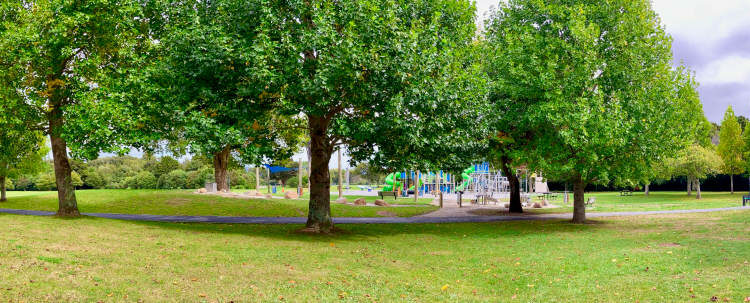
Where: Shorland Park, Island Bay
When: Sunday 18 February 2024 4pm-6pm
Theme: Kids and games

We’ll get together with our Jewish, Christian, and Muslim friends, share some food, enjoy conversation, play some games, and make new friends.

Peacenic began in Auckland in 2016. It grew out of a desire to replace the polarising bad-news stories that dominate the media with real experiences of hospitality and friendship in our own backyard. The simplest gift of sharing time and food is rewarding in itself but goes beyond that to offer a glimpse of the world as it could be. In our increasingly multi-religious, multi-ethnic community, we want to help build bridges across the divisions that have historically separated Muslims, Jews and Christians.

Shorland Park is right at the main beach at Island Bay, and is right on the popular #1 bus route. Parking is available on Reef Street, and access is via a sealed pathway. Bring food to share (ideally kosher, halal, or vegetarian) but be sensitive to other faiths’ dietary requirements; ask if you are not sure. Please take rubbish away with you. Invite friends of other faiths, consider car pooling…and enjoy yourself!

Bring your kids, and we’ll all have fun together.

For further info, contact Ann Desmond on 022 494 1775.

You can also download our flyer you’d like to invite others from your faith community or post it in your church, mosque, or synagogue.

Peacenic 2023 – An Abrahamic picnic for peace

Join us for the fourth Wellington Peacenic, a picnic for peace!
Where: Trentham Memorial Park, Upper Hutt
When: Sunday 12 February 2023 2pm-5pm

We’ll get together with our Jewish, Christian, and Muslim friends, share some food, enjoy conversation, play some games, and make new friends.

Peacenic began in Auckland in 2016. It grew out of a desire to replace the polarising bad-news stories that dominate the media with real experiences of hospitality and friendship in our own backyard. The simplest gift of sharing time and food is rewarding in itself but goes beyond that to offer a glimpse of the world as it could be. In our increasingly multi-religious, multi-ethnic community, we want to help build bridges across the divisions that have historically separated Muslims, Jews and Christians.

Trentham Memorial Park is just half an hour’s drive from Wellington CBD (put ‘43 Brentwood Street’ into Maps). Bring food to share but be sensitive to other faiths’ dietary requirements; ask if you are not sure. Please take rubbish away with you. Invite friends of other faiths, consider car pooling…and enjoy yourself!

For further info, contact David Blocksidge on 021 054 8443.

You can also download our flyer if you’d like to invite others from your faith community or post it in your church, mosque, or synagogue.

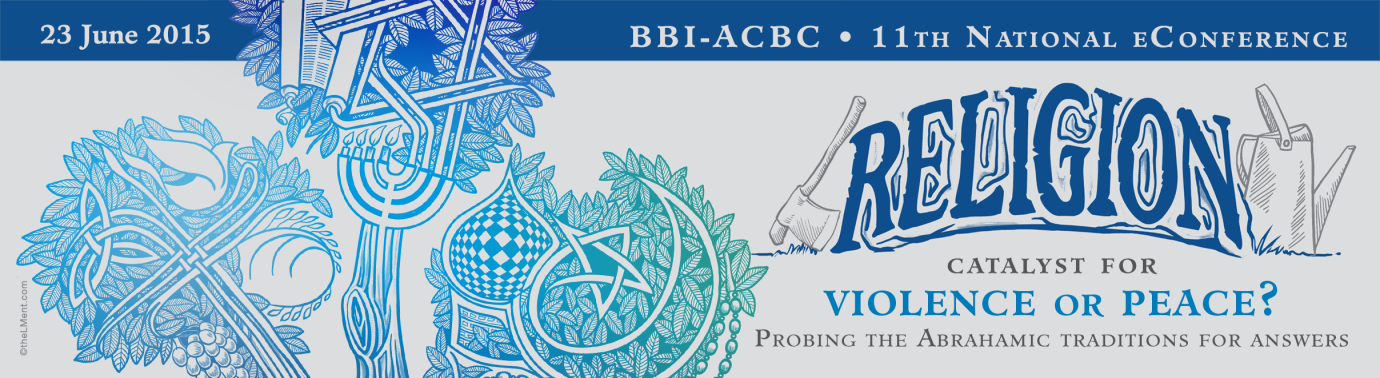
Religion: Catalyst for violence or peace?

rcvp

The Australian Catholic Church’s Broken Bay Institute (BBI) will be running an e-conference from Sydney on the topic “Religion: Catalyst for violence or peace? Probing the Abrahamic traditions for answers” on Tuesday 23 June at 12 noon NZST.

If you’re in Wellington, you’re invited by the NZ Catholic Bishops Committee for Interfaith Relations to join a live-stream group session at Connolly Hall, Guildford Terrace, Thorndon at that time.

If you’re not in Wellington or can’t make it to Connolly Hall, you can register separately and join the e-conference on the BBI’s web site at: http://www.bbi.catholic.edu.au/econference-registration.

You can also download this handsome poster for more information and to share with your friends.

One way or the other, we hope to see you there!


Jews, Muslims, and Christians United in Call for Peace

NZ Jews, Christians, and Muslims United in Call for Peace

MEDIA RELEASE
Wellington, 23 July 2014

Jewish, Christian, and Muslim leaders in Wellington issued a joint statement today regarding the current conflict in Gaza and Israel:

“We call upon all of the parties involved in the current conflict in Gaza and Israel to cease hostilities, and sit down at the negotiating table and do the hard work necessary to obtain a just and lasting peace. We urge all New Zealand Jews, Christians, and Muslims to pray for peace.”

Dave Moskovitz, Jewish Co-Chair, Wellington Council of Christians and Jews
Jenny Chalmers, Christian Co-Chair, Wellington Council of Christians and Jews
Sultan Eusoff, CEO, Federation of Islamic Association of New Zealand