A Different Kind of Peace

A thought from New Zealand, by Muslim Co-Chair Rito Triumbarto, presented as a reflection at the Wellington Abrahamic Council Meeting, 1 December 2025

They say home is where your heart is. My heart is back in Indonesia — where the call to prayer marks the rhythm of the day, and faith is a natural, open part of life.

Eight years ago, I moved to New Zealand. I came looking for opportunity and the peaceful, green land I’d heard so much about. And at first, I found it — or so I thought. It felt calm, but looking back, I realize that calm came partly from something I wasn’t used to: blending in.

For a few years, my faith was just for me and my family. Prayers at home, small gatherings with other Indonesians. Out in public, I was just another person. No one stared. No one commented. I thought that meant I was accepted. I didn’t realize it just meant I was invisible.

Then March 15th, 2019, happened.

The quiet that followed wasn’t peaceful — it was heavy. Full of shock. Our community was seen — not as neighbors or friends, but as targets. Suddenly, being invisible felt dangerous. How could such hate hide in a country known for its kindness?

In the weeks after, there was an incredible wave of love. People said, “They are us.” There were flowers, vigils, kindness everywhere. It felt like maybe, from something so awful, real belonging could grow. It felt like the country had decided: hate wouldn’t win.

But time passes, and life moves on. And lately, I’ve started to feel a new kind of unease — maybe even harder to shake than the trauma of that day.

It’s the slow understanding that here, in this same country that stood with us, it’s perfectly legal for someone to stand in public and shout hate against people like me.

Many here see that as a sacred part of freedom. To me, it feels like a luxury I can’t afford. My safety in practicing my faith now feels shaky — weighed against someone else’s right to say I don’t belong. The same law that protects my sister’s right to wear her hijab also protects someone’s right to call it a symbol of oppression.

I’m stuck between two realities: the real warmth and welcome I’ve felt from my Kiwi friends, and the cold truth of a system that gives a voice to those who hate me for what I believe.

March 15th was a horrible, single act of evil. But this — allowing public hate as a matter of right — is like a slow sickness. It quietly tells you that you’re only tolerated, not truly accepted. That your place here can be questioned anytime.

New Beginnings, New Hope: Faith responses in a changing world

This event was an evening of dialogue, connection, and exploration, jointly hosted by the Wellington Abrahamic Council and the Pearl of the Islands Foundation.

We recorded audio of the event, which you can download, or listen to here:

WhatNew Beginnings, New Hope: Faith responses in a changing world
WhenWednesday 22 October, 6 – 8:30pm
WhereToitu Poneke / thehub
49 Kilbirnie Crescent, Wellington
A light supper will be provided.
MCAdem Soylemez
ModeratorRito Triumbarto
Speakers
Marc Daalder (Jewish)
Journalist
Christine Philipo (Christian)
Teacher, Bishop Viard College
Dr Mahsheed Ansari (Muslim)
Senior Lecturer in Islamic Studies, Charles Sturt University, Sydney

Each of our Abrahamic religions draw on a rich tradition of our prophets embarking on new beginnings, with each religion also having seasons of reflection and renewal as part of our annual cycles. We’ll discuss grief, loss, forgiveness, and hope. In a world facing crises like war, climate change, and social division, we’ll explore how our three religions can come together to support healing, unity, and resilient communities.

Come along to this event if you would like a good dose of spiritual optimism, and inspiration for how we can all work together to help repair our damaged world.

Image credit: StockCake

Upholding Religious Freedom and Respect for All

Joint Statement from New Zealand Faith Communities

As leaders and representatives of diverse religious communities across Aotearoa New Zealand, we are united in our concern about the messages promoted during the public protest held on June 21, 2025 by Brian Tamaki and his followers against immigration and the spread of non-Christian religions in New Zealand.

The right to protest is a cornerstone of democracy. However, we are saddened to see rhetoric that appeared to diminish the place of some faiths in New Zealand’s multicultural society. Our religious traditions may differ, but we all share a common commitment to compassion, dignity, and the peaceful coexistence of communities.

New Zealand’s strength lies in its diversity, including its religious diversity. The freedom to worship, or not to worship, is a value we all cherish. We believe that no one faith should be positioned as having greater legitimacy than others in the life of our nation.

We encourage dialogue rather than division, and understanding rather than suspicion. In times of tension, it is especially important that we come together in the spirit of unity and mutual respect.

We remain committed to working together across our faiths to uphold these values and to support the inclusive, respectful society that we all seek to build.

Endorsed by:

New Zealand Jewish Council
NZ Central Sikh Association
Hindu Foundation NZ
Somaliland Society in New Zealand Incorporated
Wellington Abrahamic Council

A Call for Deepening Interreligious Relationships

The International Council of Christians and Jews recently issued a Pledge to Rededicating Ourselves to Deepening Interfaith Relationships.

The Wellington Abrahamic Council of Jews, Christians, and Muslims is a member of the ICCJ, and fully supports the pledge.

The pledge calls for supporters to:

  • Be blessings for one another and therefore for the world,
  • Support one another in our covenantal responsibilities to God,
  • Share each other’s joys and sorrows,
  • Actively oppose religious prejudice, including especially antisemitism, Islamophobia, or anti-Christianity, and bear truthful witness for each other when misrepresented or defamed,
  • Review our religious teachings, rituals, and practices to address any elements that caricature or teach disrespect for each other, or that in any way racialize or dehumanize anyone,
  • Continue and deepen the joint study of subjects that urgently need attention, such as: Christianity as more of a credal religion in comparison to Jewish self-understanding as a peoplehood, the land and state of Israel in Jewish and Christian spirituality, the meaning of the Jewish identity of Jesus for Jews and Christians today, the ongoing implications of the Shoah for Christians and for Jews, their bonds in the scriptural Word of God, their traditions of ethical reasoning, and how they can speak and act together for the good of humanity and creation,
  • Seek to develop deeper interreligious friendships with Muslims, and
  • Better discern the divine Presence in each other’s communities, traditions, and rituals.

We encourage our members and friends to support the pledge. To do so, please visit the Pledge page on the ICCJ web site, endorse it, and add your voice to the chorus of people working for a more harmonious world.

Endorse the pledge at:
https://conference.iccj.org/index.php?id=10

United in Sorrow, again: a prayer vigil

The Wellington Abrahamic Council, The Wellington Cathedral of St Paul, and the Religious Diversity Centre invite you to a Prayer Vigil.

In October 2023, we ran a vigil to unite in sorrow for the peoples of the Holy Land engulfed in war. Sadly, the situation is ongoing, and we thought it was time to join together again.

NEW DATE: Thursday 15 May, 6:30pm
Wellington Cathedral of St Paul, 2 Hill Street, Wellington

The event will provide a sacred space for those impacted by violence, to grieve their personal loss, and to give public expression to the grief for all united alongside them. There will be periods of shared silence, music, and meditative reflection.

As this is a peaceful gathering, no flags, banners, symbols or patches, please.

You can download a poster to share with your friends and colleagues.

We hope to see you there.

Jews, Christians, and Muslims stand together against attacks on churches

The Wellington Abrahamic Council of Jews, Christians, and Muslims were greatly saddened by the news of arson attacks at four churches in Masterton yesterday morning. Our prayers go out for our Christian sisters and brothers at the Anglican Church Of The Epiphany, St Patrick’s Catholic Church Masterton, Masterton Baptist Church and Equippers Church Masterton. We are here for you.

Jews, Christians, and Muslims stand together against religious extremism, as we have said in our October 2023 statement rejecting all forms of hate and bigotry. Our diverse religions present different pathways to spiritual enlightenment. The destruction of places of worship is an attack on all of us. Let us work together for an Aotearoa New Zealand where we can all peacefully practice our religions.

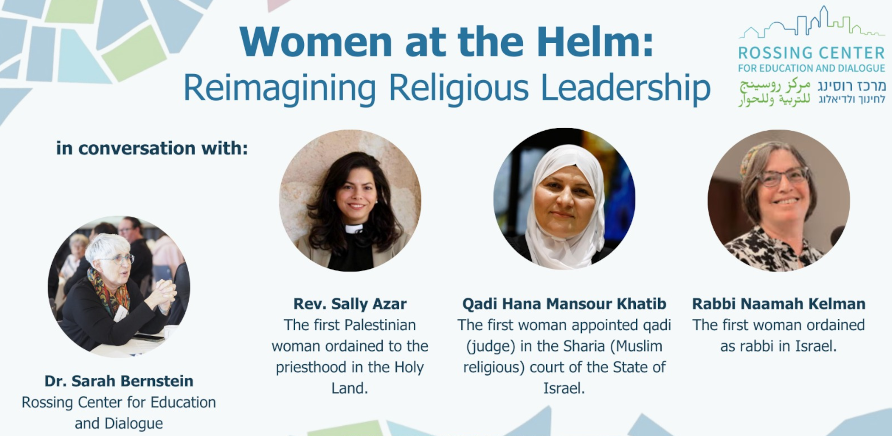
Women at the Helm: Reimagining Religious Leadership

Our sister organisation, the Rossing Center for Education and Dialogue in Jerusalem is holding an online webinar discussing women in religious leadership in Israel and Palestine.

You can watch a recording of the event right here:

WhatWomen at the Helm: Reimagining Religious Leadership
WhenTuesday 25 February 2025, 7am NZDT
WhereOnline, direct from Israel and Palestine… register at:
https://us02web.zoom.us/meeting/register/Yhb1Lo1mRBuMirvtDhfk8g
Speakers
Rev. Sally Azar (Christian)
The first Palestinian woman ordained to the priesthood in the Holy Land
Qadi Hana Mansour Khatib (Muslim)
The first woman appointed qadi (judge) in the Sharia court of the State of Israel
Rabbi Naaman Kelman (Jewish)
The first woman ordained as rabbi in Israel
ModeratorDr Sarah Bernstein
Executive Director, Rossing Center for Education and Dialogue

The early start in NZ will be worth it! We hope to see you there.

Sarah and Hajjar / Hagar – Our Abrahamic Matriarchs (with audio)

WhatSarah and Hajjar / Hagar – Our Abrahamic Matriarchs
WhenWednesday 20 November, 7:00 pm
WhereSt Joseph’s Church
152 Brougham Street
Wellington
ModeratorRev Jenny Chalmers
Jenny was the founding Christian Co-Chair of the Wellington Abrahamic Council, an Anglican priest, and until recently the Vicar General of the Waiapu Diocese.

Jenny’s intro: download, or listen here:
Speakers
Claire Massey (Jewish)
Claire is former Chair of the Wellington Jewish Community Centre and current Chair of its advisory board, a professor emerita of Business, and currently teaches yoga.

Claire’s speech: download, or listen here:
Rota Stone (Christian)
Rota is an ordained priest in the Anglican Church, and an ordained pastor in the Latvian Lutheran Church. She recently received a PhD on early Jewish-Christian relations.

Rota’s speech: download, or listen here:
Rehanna Ali (Muslim)
Rehanna is a founding member of the Islamic Women’s Council of NZ. She has a background in Law, including Islamic Shariah, and has spent the last two decades working in the field of international development.

Rehanna’s speech: download, or listen here:

Abraham is the esteemed patriarch of Jews and Muslims, and the spiritual father of Christians. Our matriarchs, Sarah and Hajjar / Hagar play a pivotal role in the unfolding stories of all three Abrahamic religions.

This evening we will focus on the vital roles of these women, Abraham’s wives, the mothers of his children, and the female co-founders of our three Abrahamic religions.

Our three speakers – each one learned and distinguished members of their religious communities – will introduce the stories from their traditions and explore their past and contemporary meanings.

Free or Koha tickets for this event are essential, and are available at:
https://events.humanitix.com/sarah-and-hajjar

If you’d like to help spread the word about this event, please download our poster, and distribute it at your church, masjid, or synagogue.

Note that all attendees to our events are expected to uphold and respect our Abrahamic Council Values.

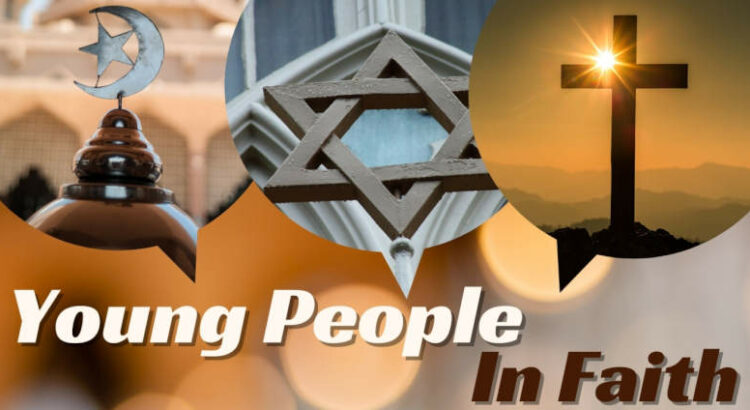
Young People in Faith

Come join us for an evening of dialogue, connection, and exploration.

Everyone is welcome to attend, but tickets (free or koha) are essential. You can get your tickets at:
https://events.humanitix.com/abrahamic-young-people-in-faith

WhatYoung People in Faith
WhenWednesday 13 November, 6:00pm
WhereConnolly Hall, 10 Guildford Tce, Thorndon
A light supper will be provided.
Speakers
Ahmet Ozturk (Muslim)
Manager Islamic Sciences and Research Academy, Sydney.
Abi Buchhalter (Jewish)
Youth Counsellor
Darlene Adrian (Christian)
Environmental consultant

Religions globally, and especially the Abrahamic religions face unprecedented challenges in the 2020’s. For our religions to survive and thrive, we need to be meaningful, relevant, and attractive to people of all ages. Judaism, Christianity, and Islam all face similar challenges in this respect.

In this session, we’ll explore these issues, including questions like

  • How does faith inspire young people?
  • What does meaningful religious practice look like?
  • What are the most pressing issues facing religious young people?

Come join this event which is being organised by the Pearl of the Islands Foundation in conjunction with the Wellington Abrahamic Council, where we’ll talk to and learn from members of our own and other religions.

A light supper will be provided.

Everyone is welcome to attend, but tickets (free or koha) are essential. You can get your tickets at:
https://events.humanitix.com/abrahamic-young-people-in-faith

You can help spread the word about this event by downloading and printing our beautiful poster, and posting it at your church, synagogue, or masjid.

Note that all attendees to our events are expected to uphold and respect our Abrahamic Council Values.

For more information, contact us on info@abrahamic.nz, or ring 027 220 2202.

Abrahamic Council Values

At our monthly internal Abrahamic Council meeting today, we agreed on a set of values to guide our discussions. We believe these values are a good basis for interreligious discussion, and are more important now than they’ve ever been.

Our values

We are kind and respectful

  • We act in good faith, and assume good faith in the actions of others
  • We appreciate our shared values and respect our differences
  • We don’t try to convert others
  • We listen respectfully to what others say

We are genuinely interested and open

  • We are open to ask and answer questions
  • We learn from each other
  • We see the inherent worth in others’ beliefs and practices

We are honest

  • No one can represent an entire religion, but we represent our own beliefs
  • We identify where our personal beliefs diverge from common or mainstream beliefs
  • We don’t speak for the beliefs or practices of other religions

We are bold

  • We are not afraid to have hard conversations, but do so with sensitivity

We are tolerant and forgiving

  • We do not blame each other for the actions of coreligionists, present or historical
  • We are slow to take offence
  • When we are offended, we treat this as a misunderstanding, seek to understand the context, and forgive.

We are united

  • We make our decisions by consensus.
  • We seek to achieve consensus, but where this is not possible, we move on.